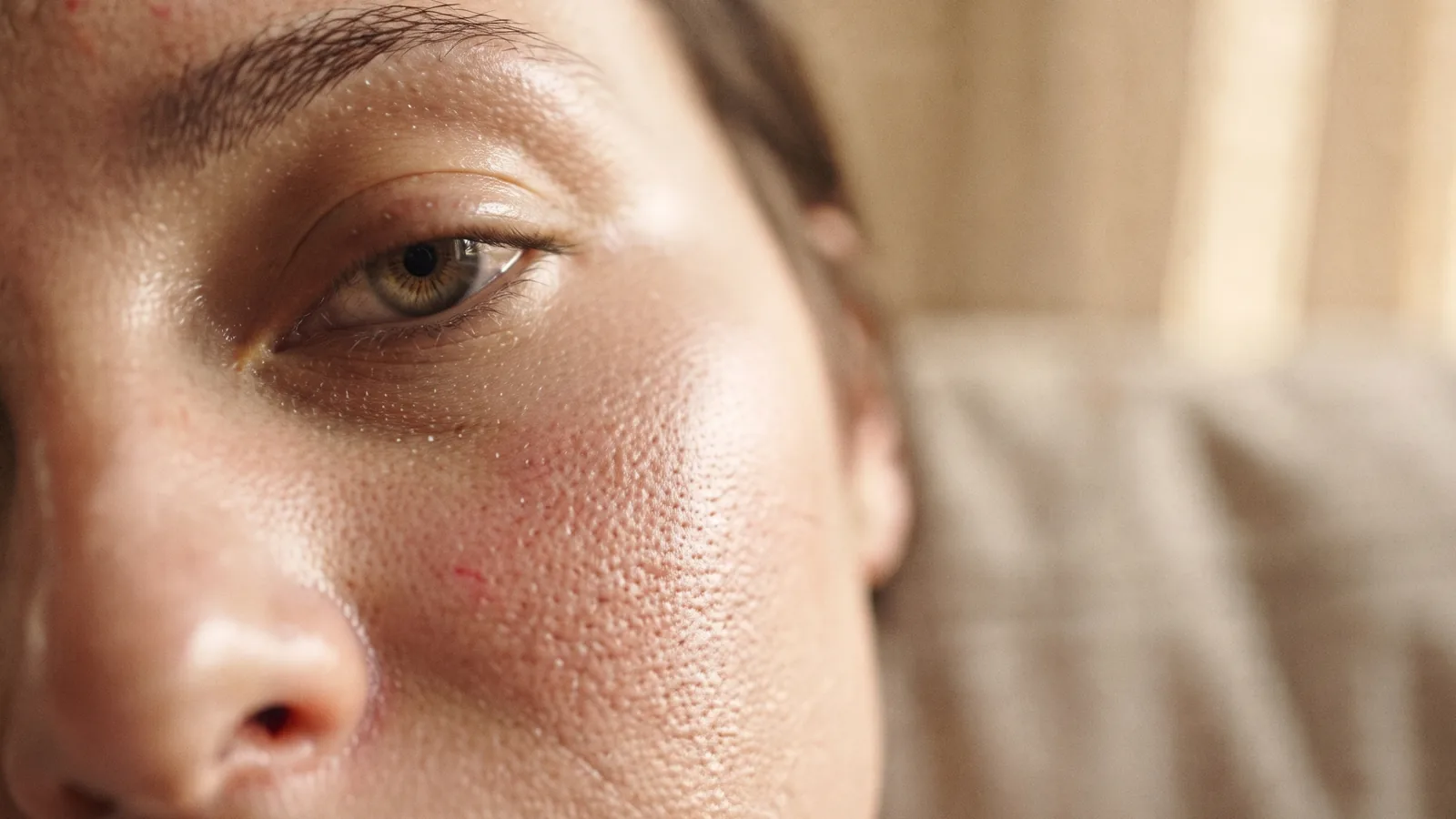
Glow is not a metaphor but a measurable colour signal — and that changes how it is worth thinking about.
Key takeaways
- An observer reads facial health largely from three pigments: melanin, haemoglobin and carotenoids (Stephen, Coetzee, Perrett).
- More fruit and vegetables is associated with a warmer, more yellow skin tone that is rated, at population level, as healthier — perception, not diagnosis.
- Diet, sleep, movement and UV protection genuinely shape colouring; colour analysis does not create it but makes it more legible.
Glow is a signal, not a metaphor
The healthy glow skin science starts in the observer's brain, not in a marketing glossary. Work by Stephen, Coetzee and Perrett shows that when people judge a face, they read its condition from very specific colour cues — from colour itself, not from pore size or smoothness. In other words, glow is information the visual system processes surprisingly fast.
That distinction matters: it shifts the conversation from wishful thinking (I want radiant skin) to mechanism. Know which signal is being read, and you know what skincare, diet and light can genuinely touch — and where honest promises end.
Three pigments an observer reads
Facial colour is, put simply, the resultant of three components. Each carries a different kind of information:
- Melanin — responsible for brown, tanned tones; it shapes the depth and evenness of colouring.
- Haemoglobin — the pigment of blood; it governs redness and the signal of circulation and oxygenation.
- Carotenoids — yellow-orange pigments from diet that give skin a warmer, faintly golden tone.
In the work of Stephen and colleagues, it was precisely subtle shifts in these components — not dramatic change — that translated into higher ratings of facial health at population level.
Carotenoids: the plate you can see in the face
The carotenoid thread is the most intriguing. Six-week diet studies indicate that greater intake of fruit and vegetables is associated with an increase in skin yellowness, and that such colouring tends to be rated as healthier and more attractive. The signal is delicate, but detectable.
It is also the most reversible of the signals — dependent on what reaches the plate over weeks, not years.
Redness and oxygenation: the rosy look of circulation
The second component is haemoglobin. Well-perfused, oxygenated skin carries a different distribution of redness than pale or tired skin — and that distribution tends to be read as a mark of vitality. In Stephen's work, manipulating the blood-oxygenation signal influenced ratings of facial health.
Movement and a well-functioning circulation support this effect naturally. It is not about a flushed face but about even, healthy perfusion — a subtle rosiness the eye reads as living skin.
The eye area: luminance, shadows and the tiredness signal
The region around the eyes (the periorbital region) is a channel of its own. Brighter, more uniform luminance there favours an impression of being rested; darker shadows tend to be read as a signal of tiredness. This is why a sleep deficit can be visible before a word is said about it.
Keep it in proportion, though: under-eye shadows have many causes — from genetics and anatomy to hydration — so treat them as an orienting signal, not a test result.
What actually improves colouring
From the evidence, a short, unglamorous but coherent list emerges:
- Diet rich in fruit and vegetables — support for a carotenoid, warmer tone (six-week studies).
- Sleep — for periorbital luminance and the general impression of being rested.
- Movement — for circulation and the oxygenation signal.
- UV protection — for evenness of melanin and the long-term condition of the skin.
None of these levers works overnight, and none is a cosmetic trick. It is colour hygiene rather than camouflage.
Limits: what we do not promise
Let us be precise. The cited work speaks of the perception of health and attractiveness at population level — statistical tendencies in how faces are rated, not your individual state of health. Colouring is a signal that correlates with certain factors, not a measurement of them. We do not diagnose, we do not treat, and we do not promise a health outcome.
How colour analysis reinforces the natural signal
Since an observer reads colour, the sensible strategy is to work with that signal rather than against it. A well-chosen palette — hue, saturation and contrast matched to your natural colouring — lets your existing colour read more clearly and coherently. Colour analysis adds nothing to physiology; it orders the context in which your natural glow is simply easier to see.
Educational content, not medical advice.
References
- Stephen, I. D., Law Smith, M. J., Stirrat, M. R., & Perrett, D. I. (2009). Facial skin coloration affects perceived health of human faces. Int. J. Primatology, 30, 845–857. DOI
- Stephen, I. D., Coetzee, V. A., & Perrett, D. I. (2011). Carotenoid and melanin pigment coloration affect perceived human health. Evolution and Human Behavior, 32(3), 216–227. DOI