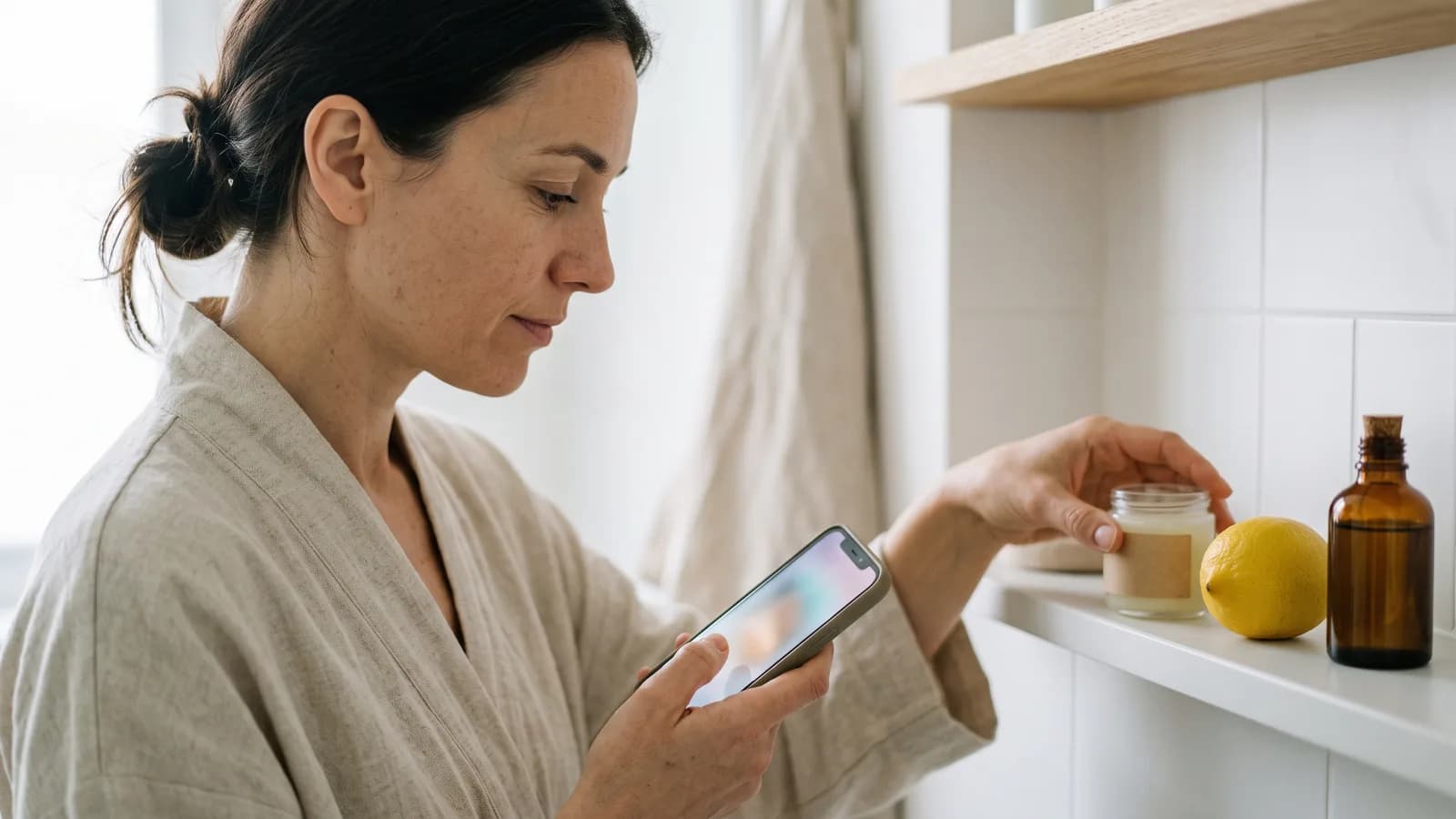
Petroleum jelly as the last step of an evening routine has racked up more than 465 million views on TikTok under #slugging. A homemade oil sunscreen, shown by an influencer with 8.1 million followers, pulled in 18 million views in its first week. With that many women copying routines straight off the algorithm, I'm checking the seven loudest ones. What actually works, what depends on your skin type, and what could land you with a burn? This is part one of the series — I'll check more trends in the next installment.
Slugging: an occlusive that works, but not on every skin type
Slugging means applying petroleum jelly or another occlusive cream as the final layer before bed. Dermatology has understood the mechanism for decades. Petroleum jelly reduces transepidermal water loss by as much as 98–99% — confirmed by a 1992 study from Ghadially et al. (Journal of the American Academy of Dermatology). Verdict: it works, especially for dry, mature, and atopic skin, where the barrier needs overnight support.
On oily, acne-prone, and redness-prone skin, the same mechanism can backfire. Occlusion also traps sebum and previously applied products against the skin, which can worsen clogged pores (Cleveland Clinic). If you have combination skin, start with a thin layer on dry areas only — cheeks, not the whole face. For occlusion alone, plain cosmetic petroleum jelly or a ceramide ointment is enough.
Skin flooding: layered hydration makes sense
Skin flooding means applying several hydrating layers — hyaluronic acid, glycerin, squalane, ceramides — onto damp skin right after cleansing. Most dermatologists endorse the practice as safe for everyday use (NBC News). There's one condition: apply hyaluronic acid to damp skin, not dry skin. On dry skin, it can pull water out of deeper layers instead of holding it in.
On oily or acne-prone skin, too many layers can encourage breakouts. Cut back to two or three and watch how your skin reacts. The hashtag #skinflooding has racked up more than 77 million views on TikTok (HuffPost). Verdict: it works, if you match the number of layers to your skin type.
Homemade SPF: why it's a real burn risk
Of this seven, this is the only trend with no room for "it depends." A review of 50 homemade sunscreen "recipes," published in the Journal of Integrative Dermatology, measured the actual SPF of the raw ingredients. Olive oil came out at SPF 8, coconut oil at SPF 7, almond oil at SPF 5 (Arkhipenko et al., 2025). Popular online "converters" — carrot seed oil supposedly at SPF 35–40, raspberry seed oil at SPF 25–50 — have no basis in research whatsoever. The review's authors state it plainly: there's no research backing these numbers.
The problem doesn't stop at weak protection. Nearly half of homemade recipes (46%) contain essential oils with furocoumarins, which increase skin's sensitivity to UV instead of protecting it. The American Academy of Dermatology adds another point: homemade sunscreens don't go through the testing the FDA requires. No one verifies their SPF or water resistance, and effectiveness varies between batches of the same recipe (AAD, 2024). None of these numbers tell you how much protection you're actually getting. If anything, that's proof a homemade sunscreen can't guarantee it. If you're looking for an SPF that actually works, check how to choose a daily facial SPF.
This doesn't mean TikTok as a platform spreads misinformation about sunscreen. An analysis of nearly a thousand videos found that 86.8% of the content promotes sunscreen use responsibly (PLOS Digital Health, 2026). The problem is specific outliers — anti-sunscreen videos and homemade "recipes" — which pull in disproportionate reach precisely because they're controversial.
Lemon juice on dark spots: the opposite of the intended effect
Lemon juice for dark spots is one of the oldest skincare myths, just relocated to TikTok. Psoralens and furocoumarins in lemon juice react with UV light and trigger phytophotodermatitis (Dr. Raechele Cochran Mathis). That means burns and brown patches that can linger for weeks, sometimes months. Even a short walk in the sun after applying lemon juice is enough to trigger a burn that heals into permanent discoloration. There's no safe, diluted dose worth recommending here.
The effect can be exactly the opposite of what people intend. Dermatologists regularly see patients with new, darker spots after home lemon treatments. In extreme cases, light patches — leukoderma — appear alongside the discoloration. Safe, well-studied alternatives are vitamin C, niacinamide, azelaic acid, and kojic acid. If you're just starting out with acids, this guide shows how to ease in without burns.
Beef tallow as a moisturizer: the market is growing, the evidence still isn't
Beef tallow as a face cream is one of the few TikTok trends that hasn't faded after a few weeks. The hashtag #tallowskincare has more than 800 million views and has kept growing steadily since late 2023. The global market for tallow-based cosmetics reached $277 million in 2025, with a forecast of $403 million by 2032 (Aloe & Tallow; NPR). That's market size, not proof of effectiveness. Keep the two separate.
There are simply no clinical studies showing tallow outperforms standard dermatological creams. Tallow is a fat, moderately comedogenic — it can clog pores and worsen acne, despite popular accounts of "clearer skin" (BuzzFeed, dermatologist comment). Homemade batches add another risk. They lack the sterility and lab testing that store-bought cosmetics go through, so bacterial contamination and allergic reactions are more likely. Verdict: it depends. If you want to try it, treat it as an experiment at your own risk, not a replacement for a proven cream.
Chlorophyll water: hydration, not magic
Chlorophyll water is supposed to give you clearer, more radiant skin. There's no evidence that drinking it alone does anything. "There's really no research on this at all," says dermatologist Dr. Heather Woolery-Lloyd (TODAY.com). What exists are only very small studies, on 10–24 people, and on a completely different form — topical chlorophyllin gel for acne and signs of aging. Drinking something and applying it to skin are two different things, and the effects of one don't automatically carry over to the other.
The improvement trend enthusiasts describe more likely comes from general hydration than from chlorophyll itself. A rare but real risk of excess liquid chlorophyll is pseudoporphyria — a blistering, photosensitive rash. Verdict: it won't hurt you in reasonable amounts, but it doesn't work the way the trend suggests either. Drink water for hydration, not for the chlorophyll color.
At-home face shaving: safe if you know the technique
Dermaplaning — exfoliating dead skin and peach fuzz with a blade — comes out surprisingly well against the rest of this list. Experts consider the at-home version reasonably safe, if you know what you're doing and stay careful (Center for Dermatology & Laser Skin Surgery). Safety mostly comes down to the tool — disposable cosmetic blades are a different thing entirely from "medical" scalpels bought online without training. Too much pressure causes micro-injuries: irritation and redness. Cutting too deep risks something more serious — bleeding or scarring. Dermatologist Dr. Debra Jaliman recommends a professional treatment every 3–4 weeks, with gentle at-home shaving no more often than every few weeks.
One more myth rides along with this trend: that shaved hair grows back thicker, darker, and faster. That's an optical illusion. Shaving cuts hair at its widest point along the shaft, which naturally tapers toward the tip. The hair follicle responsible for thickness, color, and growth rate is left untouched — Mayo Clinic has confirmed this for years (source). Verdict: it depends on technique and tools, not on the idea of shaving your face itself.
None of these myths mean you need to overhaul your whole routine — sometimes it's enough to swap one step for a safer one. In part two, I'll check the next batch of trends straight off the algorithm.
References
- American Academy of Dermatology — "Homemade sunscreens not effective" (2.07.2024) source
- Arkhipenko Z., Shah S.C., Yi R.C., Feldman S.R. — "A Review on Homemade Sunscreen", Journal of Integrative Dermatology, 7.04.2025. DOI: 10.64550/joid.yz1h1125 source
- PLOS Digital Health — analysis of 971 TikTok videos on SPF (18.06.2026). DOI: 10.1371/journal.pdig.0001440 source
- Ghadially R. et al. — "Effects of petrolatum on stratum corneum structure and function", Journal of the American Academy of Dermatology, 1992 source
- Cleveland Clinic — "Slugging: Does This Skin Care Trend Work?" source
- Dr Raechele Cochran Mathis — "Lemon Juice for Skin Lightening: Why Dermatologists Warn Against It" source
- NPR — "Miracle balm or cow pie? What's behind the beef tallow skincare trend" (2.06.2025) source
- BuzzFeed — "Dermatologist Weighs In On Beef Tallow TikTok Trend" source
- TODAY.com — "Chlorophyll water benefits: Is it good for your skin?" (quoting Dr. Heather Woolery-Lloyd) source
- Center for Dermatology & Laser Skin Surgery — "Is Dermaplaning Safe to Do Yourself?" source
- Mayo Clinic — "Shaving hair: Does shaved hair grow back thicker?" source
- JMIR Dermatology — "Perception, Quality, and Accuracy of Sunscreen Content on TikTok: SkinMedia Cross-Sectional Content Analysis" source
- NBC News — "Skin flooding: Experts explain the viral TikTok trend" source
- HuffPost — "Skin Flooding Is The Latest TikTok Skin Care Trend" source
- Dexerto — "Expert warns against recreating TikTok influencer's viral homemade sunscreen" source
- Aloe & Tallow — "Is Beef Tallow Trending? Inside the $277M Skincare Movement That's Not Slowing Down" source